When building complex conversational systems, standard linear chains (like sequential prompts) often fall short. Users ask clarifying questions, change their minds mid-conversation, or request actions that require conditional looping.
To solve this, I’ve been experimenting with LangGraph—a framework from LangChain designed specifically for building stateful, multi-actor applications with LLMs. Here are my implementation notes, design patterns, and lessons learned.
The Workflow Architecture
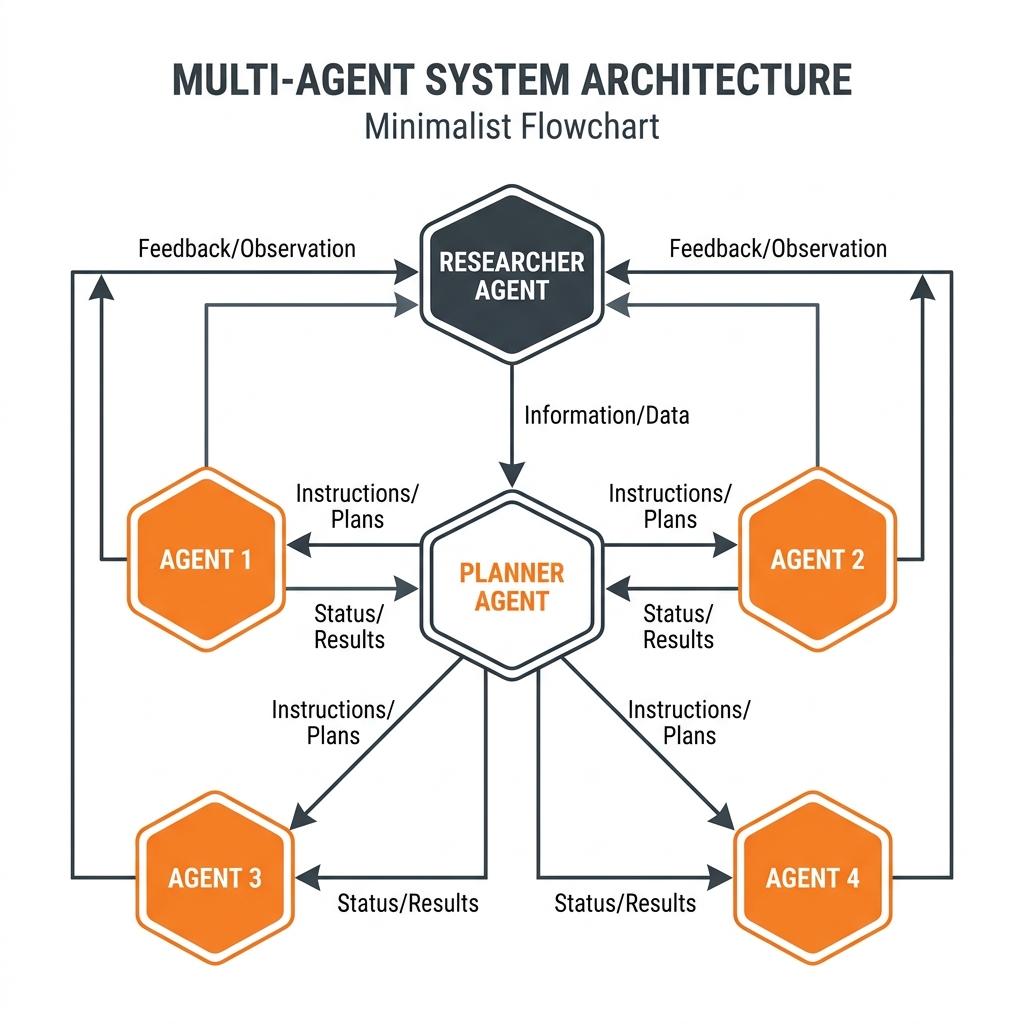
A robust agent is best modeled as a State Graph. In this model, agents, tools, and routers represent Nodes, while the transitions between them are Edges containing conditional router logic.
Here is the design diagram of the multi-agent system I built:
Core Components
- State: The shared, persistent database representing the current context of the conversation.
- Nodes: Python functions that take the current
Stateas input, perform operations (e.g., call an LLM or fetch data), and return updates to theState. - Edges: Connections determining which Node to run next, often based on conditional routing logic.
Defining the Agent State
In LangGraph, state schema is paramount. It determines what information nodes can read and write. Here is how I set up the thread state using Python’s TypedDict and custom reducers to manage message histories:
from typing import Annotated, Sequence, TypedDict
from langchain_core.messages import BaseMessage
from langgraph.graph.message import add_messages

class AgentState(TypedDict):
    # The add_messages reducer appends new messages to the existing list
    messages: Annotated[Sequence[BaseMessage], add_messages]
    next_step: str
    user_context: dict
Agent Routing & Node Types
- Planner Node: Breaks down user goals into concrete actionable steps.
- Execution Node: Invokes domain tools (databases, search APIs, code interpreters).
- Reviewer Node: Verifies output quality before returning final responses to the user.
Conditional Routing Logic
def should_continue(state: AgentState) -> str:
    messages = state["messages"]
    last_message = messages[-1]

    if last_message.tool_calls:
        return "call_tools"
    return "final_answer"
Key Takeaways & Lessons Learned
- State Reducers are Essential: Using custom reducers prevents accidental state overwrites during parallel node execution.
- Always Bound Loops: Implement maximum recursion limits to prevent infinite loops when LLMs fail to settle on a tool output.
- Stream Everything: Long-running multi-agent pipelines require real-time streaming to keep user interfaces responsive.